

If you’ve ever typed “how to survive the holidays with toxic family” or “holiday anxiety with CPTSD” into Google at 2am, this is for you.
The week before a holiday is when a lot of bodies start to panic. You might notice your chest getting tighter, your sleep getting weird, your appetite swinging, or your brain obsessing about money, gifts, or family gatherings. You might feel lonely, even if you technically “have people.” You might be co-parenting with someone your nervous system doesn’t trust.
Nothing is wrong with you for feeling like this. Holiday anxiety hits different when you carry trauma.
I can’t fix your family, your budget, or your history in one post. But I can make sure you’re not going into this season empty-handed.
I pulled together seven trauma-informed books that function like survival companions: one for toxic or emotionally immature family, one for burnout and emotional overload, one for nervous system tools, one for grief, one for abusive dynamics, and more. I put them into one easy Amazon list so you don’t have to hunt: Holiday Nervous System Survival Book List <-click here
You do not need to read them all this week. Start with the one that makes you whisper, “Oh… that’s me.”
And as you read, I’ll also share some of my own resources like my book Beyond the Score, my free Half Loved, Fully Confused ebook, and three gentle printable journals on Etsy that you can weave in if you want extra support.
Take a breath. You don’t have to white-knuckle this season alone.
How to use this little book stack
Think of these as seven different lifelines for seven different kinds of holiday pain:
- holiday anxiety and the urge to shut down
- toxic family holidays and boundary guilt
- body memories and CPTSD triggers
- burnout from doing all the emotional labor
- grief and lonely holidays
- co-parenting and unsafe partners/exes
- the deep work of healing your nervous system long-term
You’re allowed to skip around. You’re allowed to read slowly. You’re allowed to highlight like you’re in love.
Let’s walk through them one by one.
1. Wintering is for when when holiday anxiety makes you want to disappear
If the holidays make you want to go quiet, cancel everything, and hide under a blanket, you’re not lazy; you’re “wintering.”
In Wintering, Katherine May talks about those times when life forces us into what looks like a winter season: illness, loss, burnout, depression, huge transitions. She treats these seasons not as personal failures, but as natural, necessary pauses where your body and soul are trying to repair.
Why it helps for the holidays:
When everything around you screams “magic” and “hustle,” this book whispers, “You’re allowed to slow down.” It gives language and dignity to your low energy, your sadness, your urge to step back from the noise. That alone can loosen the shame spiral around holiday anxiety.
Beautiful companion: if you want to gently rebuild some warmth toward yourself while you read, my 7-Day Self-Love Journal on Etsy pairs well here with just one small prompt a day to remember you are more than what you accomplish in December.
2. Set Boundaries, Find Peace is perfect when you feel yourself bracing for toxic family holidays
If the phrase “family holiday” makes your stomach knot up more than it makes you smile, this book is for you.
Nedra Glover Tawwab breaks down what boundaries really are (spoiler: not punishment, not cruelty), why we struggle with them especially with family of origin and how to communicate them clearly. She offers actual sentences you can say when someone comments on your body, your life, your parenting, or tries to drag you into old roles.
Why it helps for the holidays:
This is the book that turns “I should have boundaries” into “Oh, I can actually say this.” When you’re googling “how to survive the holidays with toxic family,” what you really want is permission and language. This gives you both.
Beautiful companion: after a hard gathering, your nervous system might be buzzing or shut down. That’s where my Self-Regulation Journal comes in. This printable workbook comes with soft prompts and body check-ins to help you process what just happened and come back down from the spike.
3. The Body Keeps the Score helps you understand why your body flips out every holiday
You may notice you get sick, numb, snappy, dissociated, or exhausted every single year around this time no matter how much you “prepare.”
In The Body Keeps the Score, Bessel van der Kolk explains how trauma literally reshapes the brain, nervous system, and body. He talks about why we react so strongly to certain smells, rooms, songs, or family members, and why talk alone doesn’t always touch the pain.
Why it helps for the holidays:
When you understand that your nervous system is trying to protect you, not sabotage you, the shame softens. You stop asking “What’s wrong with me?” and start asking “What happened to me, and how can I support my body better this year?”
Beautiful companion: my book Beyond the Score is my own lived-through version of this taking the “body keeps the score” science and turning it into everyday language, micro-practices, and real stories. If you want a full, gentle roadmap out of constant overwhelm, it’s waiting for you when you’re ready for the deeper work.
4. Anchored gives you actual nervous system tools you can use this holiday season
A lot of “holiday stress relief” advice is cute but vague. “Just relax!” Cool. How?
In Anchored, Deb Dana takes polyvagal theory (big science about how your nervous system detects safety and danger) and turns it into very simple practices. You learn how to notice when you’re in fight, flight, freeze, or collapse and what tiny things can shift you one notch toward steadier.
Why it helps for the holidays:
This book is incredibly practical for “I have ten minutes in the car before I walk into this house” or “I’m hiding in the bathroom at a work party.” It gives you nervous system regulation that fits into real life, not just retreat settings.
Beautiful companion: my 7-Day Trauma Release Kit is built in the same spirit with one small daily somatic practice (breath, movement, sound, ritual) you can do in your actual living room to help your body discharge some of what it’s holding.
5. Burnout is so helpful for when you’re the one doing everything and can’t figure out why you’re so tired
If you’re the person who remembers the gifts, plans the meals, tracks the schedules, absorbs everyone’s moods, and tries to make it “magical” while your own nervous system is screaming… Burnout will feel like someone reading your diary out loud.
Emily and Amelia Nagoski explain the difference between stressors (the things happening) and the stress cycle (what your body does with them). They show why you still feel like you’re on fire even when the event is over, and which activities actually complete the stress cycle.
Why it helps for the holidays:
This is for people who hit January feeling like they missed December because they were busy managing it for everyone else. It helps you understand your exhaustion and gives you specific ways to move that stress out of your body.
Beautiful companion: pairing this with the 7-Day Trauma Release Kit can turn the end of each day into a 5–10 minute “stress cycle completion” ritual so your body doesn’t carry everything into the new year.
6. Adult Children of Emotionally Immature Parents is for when going home turns you into a child again
If walking into your childhood home drops you straight back into the role of fixer, lost child, rebel, or golden child, this book will hit deep.
Lindsay C. Gibson describes what emotionally immature parents look like—self-involved, unpredictable, dismissive, or enmeshing—and how growing up with them wires you to ignore yourself, overfunction, or feel crushing guilt any time you need something.
Why it helps for the holidays:
So many people search “toxic parents holidays” or “why do I feel crazy after family events” without realizing there’s a pattern and a name. This book explains the pattern and offers pathways to relate differently, even if your parents never change.
Beautiful companion: my free ebook & journal Half Loved, Fully Confused was written for that exact fog. For when you’ve been trained to doubt yourself in relationships. If your body is quietly asking, “Is this emotionally safe?” and you don’t trust your answer yet, start there. It’s free, and it’s gentle.
7. Why Does He Do That? helps a lot when you’re navigating the holidays with an angry or controlling partner or ex
The title uses “he,” but the core is about abusive, controlling patterns in general.
Lundy Bancroft walks through the mindsets and tactics of controlling, angry partners: entitlement, manipulation, “good days” that confuse you, and how they keep you walking on eggshells. He explains, point-blank, that you are not making it up and you are not causing their behavior.
Why it helps for the holidays:
If you’re co-parenting with someone like this, stuck in the relationship, or newly out and still trauma-bonded, the holidays are brutal. This book brings clarity in a season that thrives on denial and pretending. It’s not light, but it is incredibly stabilizing.
Beautiful companion: if you’re in this dynamic or untangling from it, Half Loved, Fully Confused plus my Self-Regulation Journal can help you map the red flags, track your body’s signals, and slowly rebuild your self-trust.
My own tools, if you want more support
You absolutely do not have to buy anything to deserve help. The blog posts and this book list alone might be enough for now.
But if you do want structured support that’s trauma-aware and gentle, here’s how my work fits into this stack:
- Beyond the Score (book – Amazon): for anyone living with long-term trauma and overwhelm who wants a full, grounded roadmap for nervous system healing, micro-practices, and living beyond constant reactivity.
- Half Loved, Fully Confused (free ebook/journal): for people in confusing, covertly harmful relationships who need help seeing the patterns on paper.
- 7-Day Self-Love Journal (Etsy): for rebuilding self-worth and compassion when the holidays make you feel like “not enough.”
- Self-Regulation Journal (Etsy): for mapping triggers, tracking body signals, and giving yourself one tiny regulating choice at a time.
- 7-Day Trauma Release Kit (Etsy): for gently moving stress, grief, and anger out of your body with simple somatic practices.
And then there’s the Holiday Nervous System Survival Book List which gathers all seven books from this post in one place so you can bookmark it, send it to a friend, or build your own little survival stack.
You don’t have to earn this support. You’ve already earned it by surviving everything you have up to this point.
Take another breath.
Pick one place to start like one book, one journal, or one article and let that be enough for today because it is enough, and so are you.

A New Chapter in Healing
For years, many of us have carried the silent weight of trauma. The racing heartbeat in stillness, the exhaustion that no amount of sleep can touch, the way our bodies brace even when the room is calm. We’ve read the research, memorized the theories, and still felt trapped inside patterns we couldn’t think our way out of.
Beyond the Score was written for that exact moment. It is a body-based trauma recovery guide that blends science, somatic practices, and story into something simple: a roadmap home. This book shows how to soften the patterns stress leaves in the body, how to hear the signals you once ignored, and how to slowly reclaim safety and self-trust from the inside out.
The phrase “the body keeps the score” has become a way of naming how trauma lodges in our nervous system and our cells. Beyond the Score™ begins where that truth leaves off: your body not only remembers the trauma, it also remembers the way home.
It is not clinical nor distant. It is a companion that whispers, you are not broken, you adapted.
Launching September 22, Beyond the Score will be available in print and digital formats. Every copy also fuels grassroots projects like The Whisper Project™, which brings trauma resources to people healing quietly around the world.
If your body has been asking for a softer way forward, this is it.
Free Printable & Email Reminder→ beyondthescore.me

Holiday Emotional Hangover and a 5-Minute Practice to Plan a Softer December
The day after a holiday can feel like an emotional hangover. This 5-minute practice helps trauma survivors process triggers and plan a softer, more nervous system friendly December.
Keep reading

Surviving the Holiday Table With Abusers or Unsafe People: A 5-Minute Bathroom Reset
Sharing holidays with abusers, toxic exes, or unsafe family is brutal. This 5-minute bathroom reset helps trauma survivors regulate their nervous system during triggering gatherings.
Keep reading

When You’re Dreading the Holidays With A Partner Who Hurts You
There’s a specific kind of loneliness that shows up right before the holidays when you’re in a relationship that confuses your heart.
Keep reading
Holiday Money Stress, Shame, and a 5-Minute Nervous System Reset
Holiday money stress can trigger shame, anxiety, and CPTSD. This 5-minute nervous system reset helps you step out of the “I’m failing” spiral and into kinder choices.
Keep reading

Holiday Anxiety and Old Places: A 5-Minute Grounding Practice for Trauma Survivors
You know that feeling when your hand is on the doorknob and your whole body suddenly remembers every other time you walked through that door? The week before a holiday, a lot of us start to feel the old rooms before we even get there. Maybe it’s your childhood home, a relative’s house, a church,…
Keep reading
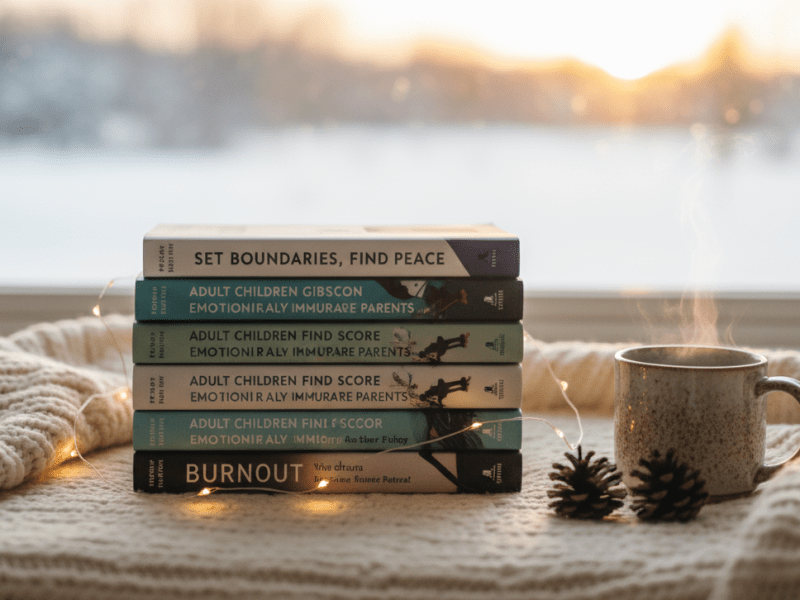
7 Trauma-Informed Books to Help Your Nervous System Survive the Holidays
Holiday anxiety, toxic family, and CPTSD triggers hit hard. These 7 trauma-informed books + gentle tools will help your nervous system survive the holidays.
Keep reading

Food as a Daily Nervous System Practice
Food as a Daily Nervous System Practice
Your body heals inside patterns that feel safe and repeatable. Food is one of the simplest ways to practice safety. When meals are steady, your nervous system gets fewer alarms. This week we’ll keep it basic: protein, fiber, healthy fat, color, and warm foods at night.
Who
Anyone living with stress carryover, interrupted sleep, anxious spirals, or afternoon crashes who wants a calmer baseline.
What
Build meals that stabilize glucose and support the gut–brain loop without expensive products or perfect tracking.
When
Start today. Repeat for seven days before you judge it.
Where
In your normal life, with foods from a regular grocery store.
Why
Steadier blood sugar and gentle anti-inflammatory foods create fewer internal alarms, which makes it easier to downshift and sleep.
Quick Builds
- Kefir Oat Smoothie: plain kefir, banana, blueberries, rolled oats, ground flax, cinnamon.
- Lentil Skillet: sauté onion and garlic, add soaked lentils, canned tomatoes, paprika, turmeric, finish with spinach and lemon.
- Salmon or Chickpea Bowl: cooked rice or quinoa, greens, roasted carrots, canned salmon or roasted chickpeas, tahini–lemon drizzle.
Close the day with something warm. A small bowl of miso–ginger soup or cocoa made with milk of choice and a pinch of cinnamon tells the body it can settle.
This is general education, not medical advice. Adjust for allergies or conditions. If you have an eating-disorder history, work with your clinician.
Follow @LiveBeyondTheScore — Micro practices for everyday life to release trauma & live without constant overwhelm.
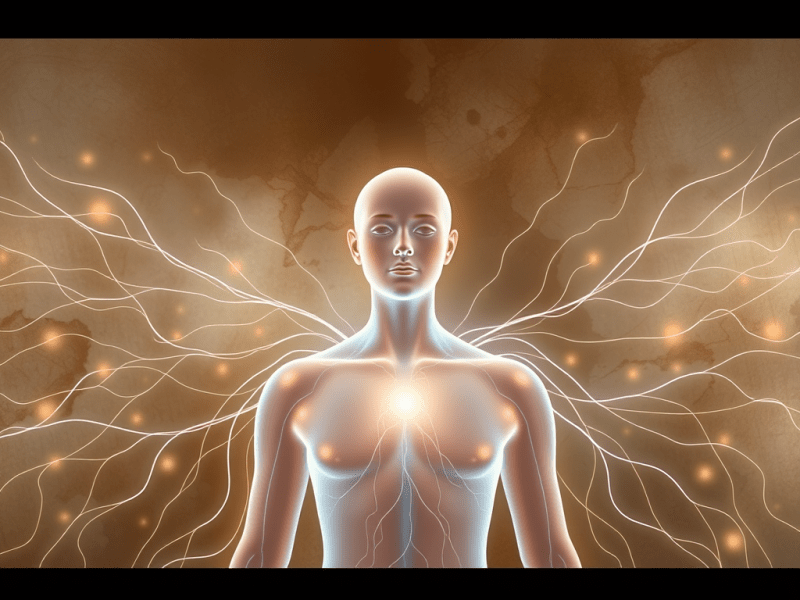
The Nervous System Is a Storyteller: Healing the Body’s Memory
This week’s reflection is for anyone who’s ever wondered why their body still reacts long after the danger is gone. For anyone who’s ever asked, “Why am I still jumpy, tired, or tense when my mind knows I’m safe?” The truth is that your body remembers what your mind tries to forget.
The Nervous System Is a Storyteller
Your nervous system is not broken. It’s a record keeper; a poet of survival. Every tremor, flinch, or sudden silence is a line in a story your body didn’t know how to tell out loud.
Long before you had language, you had sensation. Before you could name betrayal, your stomach already knew the twist. Before you could identify abandonment, your chest had already learned the collapse. The body memorizes everything that consciousness can’t hold. It catalogs the unspeakable in breath patterns, muscle tension, and the chemistry of vigilance.
When safety returns, or even hints that it might, the body begins to rewrite. A trembling hand, a yawn in therapy, a sob in the shower aren’t signs of weakness. They are the nervous system telling the truth after years of compression.
The amygdala softens its grip. The vagus nerve, long tightened, begins to hum. Your body starts to trust that it won’t be silenced again. And slowly, the story shifts from one of survival to one of becoming.
Healing doesn’t mean deleting the old chapters. It means letting your body edit the story in real time adding breath where there once was none and compassion where there once was bracing. It’s a collaboration between your biology and your becoming.
If you listen long enough, you’ll notice: the story your body tells now is softer. Still honest. Still scarred. But finally, free to end differently.
Excerpt inspired by my book, Beyond the Score: How to Reclaim Your Body, Calm Your Nervous System, and Move Through Trauma.
Your body remembers the pain, but it also remembers the way home.
Tags: trauma healing, somatic therapy, nervous system, body memory, emotional recovery, beyond the score, healing journey
Leave a comment